What Starship changes for keeping records, and what it does not
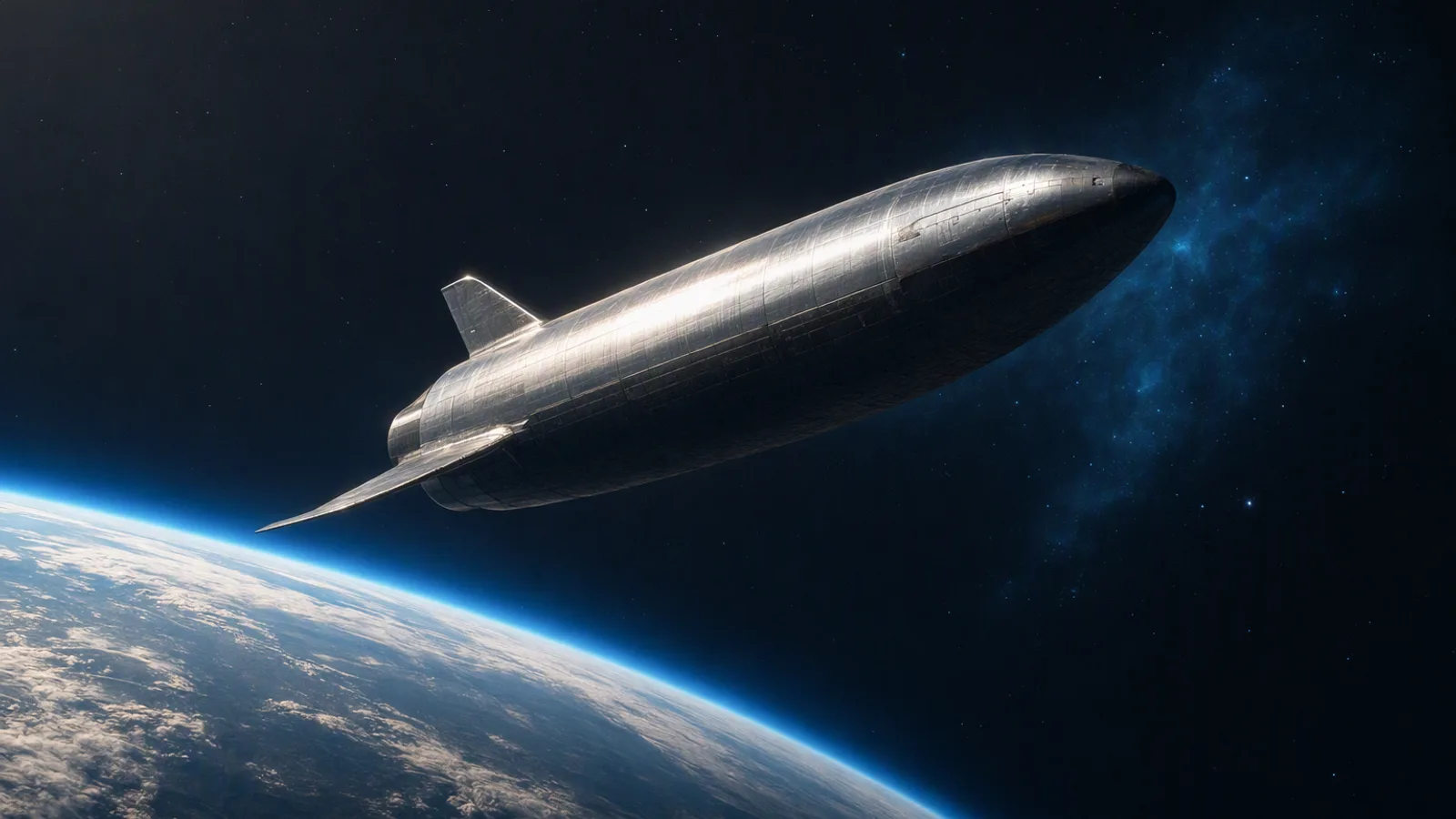
At the end of September 2026, on its fourteenth flight test, SpaceX’s Starship reached orbit for the first time, after thirteen flights it had deliberately kept on suborbital paths. It lost a vacuum engine on the way and the mission was cut short, but the ship survived re-entry. The current version is meant to carry around 100 tonnes to low Earth orbit and to be reused. Moving propellant from one Starship to another in orbit, which the Moon landings for NASA’s Artemis programme depend on, had not been attempted by the time of the latest flight.
Every time launch gets cheaper, the same idea returns: put a copy of humanity’s records somewhere no earthly disaster can reach. It is worth being precise about what a cheaper rocket actually changes.
What it changes
Mass stops being the constraint. Past “archives in space” were measured in grams — a crystal in a car’s glovebox, nickel discs in a lunar lander. With a hundred tonnes per flight, size limits on a deliberately durable archive become a budget question instead of a physics one.
Distance from Earthly risk becomes cheap to buy. Floods, fires, wars and bankruptcies do not reach a lunar crater. That property is real and, for a small number of reference copies, valuable.
What it does not change
Space is not a gentle place for data. Radiation flips bits in electronics, and temperature swings stress any medium. Passive media such as etched metal or laser-written glass tolerate this far better than drives, but they are not designed to be updated, so whatever goes up is frozen as it was on the day it was written.
Nobody can maintain what they cannot reach. The practice that actually keeps archives alive is periodic checking and migration to new formats and media. A copy in orbit or on the Moon cannot be checked next year, corrected if wrong, or moved forward when its format ages. It is a time capsule, which is useful, but it is not an archive anyone is looking after.
Reading it back is the expensive direction. Launch costs are falling; landing, retrieving and returning are not falling at the same rate. A record that can only be read by mounting a mission is, for practical purposes, unreadable to the people it was made for.
The hard problems were never about altitude. A record survives because it is in open formats, described well enough for a stranger, held in several independent places and handed on to someone with a reason to keep it. None of those gets easier in orbit.
Where this leaves us
Cheap launch makes one more kind of copy possible: a sealed, self-describing reference set placed deliberately out of reach. That is a reasonable thing to want at the far end of a preservation plan. It is not a replacement for the near end, which is several maintained copies on Earth, in formats a reader in 2125 can still open.
- starship
- spacex
- off-planet archives
- maintenance